Image

Grow Smaller!

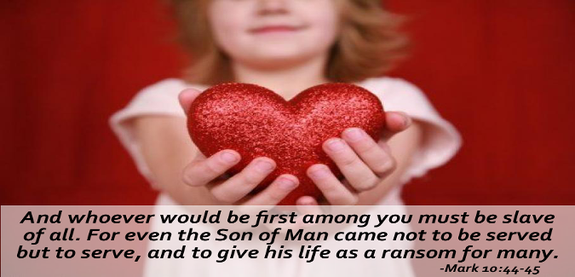
Every day is a chance to grow. We can grow in knowledge and skill, we can grow physically, spiritually, emotionally, financially, and relationally. And most of the time, growing means getting bigger. But in God’s kingdom, things may look a little different. Jesus says to be great, we must get small. (Matthew 18:1-4; 20:26-28)

We must be like children and grow small in our own eyes. That way, we can be playful and take ourselves less seriously. We can ditch pride and be meek and humble in heart. We can declutter our minds and our homes and cast off things that holds us down and burden us. We need a smaller sense of ourselves and bigger view of God.

After all, we must get small to go through the narrow gate that leads to life (Matthew 7:13,14). Joy comes by being present like a little child and trusting our big Daddy God. Grow small and let Him put you on His shoulders. The view is divine and He can carry you places you never thought possible. Love y’all!

Heart scan!

2a46d8c300000578-0-image-a-6_1436285982550

Above all else, guard your heart, for everything you do flows from it.  –  Proverbs 4:23 (NIV)

If we are willing, God wants to be at home in our hearts. He wants them to be a place of peace and joy. Ours hearts are his primary concern. He loves us and wants to stay connected, but in our busyness and distraction it is easy to lose touch with our own hearts and with Him.

Every day, we can make time to be still; we can ask our Great Physician to do a heart scan to show us what is there and what is missing.  We ask, “Search me, God, and know my heart; test me and know my anxious thoughts.” – Psalm 139:23

Once we do this inventory, we can clear out the rubbish and reorder our lives with reflection and His direction.

Yet even if we make the time, it is easy to lose focus and miss the value of our time with God. Below are a few strategies to maximize the experience-

  1. Have a special place. Try to make it quiet and comfortable.
  2. Put it on your schedule. Some people do best in the morning. Others do better at lunchtime or in the evening. Some hear God best in the wee hours of the morning.
  3. Get some of the word in you by reading or listening to scripture.
  4. Use a devotional like Jesus Calling by Sarah Young or My Utmost for His Highest by Oswald Chambers. You can read or listen to an audio version.
  5. Try meditating or focusing on your breath.
  6. Listen to some worship music or watch a Christian music video.
  7. Walk or dance to get yourself engaged.
  8. Pray for yourself and others. You may wish to use a prayer list or ask God to bring people to mind.
  9. Go outside to a park or a garden.
  10. Scan your body to see if you are in a comfortable position and to determine if you are carrying tension anywhere.
  11. Go through a list of the fruits of the Spirit to help you see where you may need to grow.
  12. Check your attitude. Are you resentful? Are you grateful? Do you feel hope or dread about the day ahead?
  13. Write down your inventory and spend some time journaling.
  14. Be prepared for distractions. Have a paper or notebook where you can write down the things that occur to you that you must attend to at another time.
  15. Be patient with yourself. You do not have to do it perfectly to gain benefit. As G. K. Chesterton said, “Anything worth doing is worth doing badly.”

Let your face know!

108686357

We feel compassion for little children when we see their distress. When they are sad, hurt, angry or disappointed, their little faces show it, and most of us try to help when we see it. Children don’t often hide their feelings, and when they are very small, they can’t cover up even if they want to.

Sadly, though, if we are not given attention to or acceptance of strong emotions when we are small, we learn to hide them. We harden our hearts and move into our heads. And when we do, we may lose touch with those feelings and act them out, rather than show them or share them directly. Men, in particular, are told things like, “Big boys don’t cry!”

But as it turns out, dampening negative emotions cuts out positive feelings, too. And if we are good at hiding our feelings, the people who love us are at a loss to know what we feel, what we need, and how to engage in a healthy way.

As we grow in relationships, though, we can choose to become more transparent and let our face show our feelings. This is vital, because it lets others see how their behavior affects us. When our countenance shows that we are sad or lonely, frustrated or repentant and we find words to go with the feeling, others can express empathy. They can say, “I am sorry you are feeling that way. I care about you. Can I help?”

Even anger expressed calmly can help us show how others’ actions affect us. Solomon says it well, “Better is open rebuke than hidden love.”(Proverbs 27:5)

If we are not willing to show our feelings, we are tempted to make the other person wrong by appealing to a legal or moral standard. “You had no right to…” “The considerate thing would be to…” “I don’t treat you that way!” “The least you could do is…” Rather than empathy, these types of communications are apt to generate defensiveness or counter-attack.

If you are challenged when it comes to emotional expression, consider practicing. Stand in front of a mirror and work on displaying the facial expressions that reveal the state of your heart. Otherwise, your message may be lost in its delivery.


When I first began speaking publicly, I was horrified to watch a video of my presentation. The lack of expression, animation and change in vocal inflection made my talk fall flat. But my desire to communicate my message drove me to practice.

Though it felt awkward and forced at first, I gradually became more comfortable with being more demonstrative of my passion for my topic. And as my audience became more engaged, I was empowered to be even more expressive. If we want relationships that are powerful and engaged, accurate emotional expression is vital.

While a poker face is good if you are playing poker, it is not helpful in reaching your mate. Especially when you are hurt or sad, frustrated or repentant, let your face know!


Master or Servant?


rodinthinkerkansascity1b

Master or Servant?                                                                                                                                For years I tried to mastermind                                                                                                                 My life as I thought God designed.                                                                                                               I tried so  hard, but there’s no doubt                                                                                                          I never made it all work out.

I’d worry, obsess, I’d stew and fret,                                                                                                         Looking back with deep regret,                                                                                                                     Or anxious, facing the unknown,                                                                                                                  I feared the final judgment throne.

I’d do better, then disaster,                                                                                                                             I finally had my fill of “master”                                                                                                              Today I only want my part                                                                                                                           And cultivate a servant’s heart.

As master I was judge and jury                                                                                                          Excusing sin or showing fury,                                                                                                                       A servant’s job, though, let’s me turn                                                                                                    To grace – repent, forgive, and learn.

Mine is not to master plan,                                                                                                                            I don’t have to understand.                                                                                                                            I only need what’s next to do,                                                                                                                    With strength and focused follow-through.

It’s not our job to orchestrate,                                                                                                                       So don’t get hooked on master bait!                                                                                                         Do what’s asked, then stand and wait,                                                                                                       God provides the servant’s plate.

A Servant’s Heart

servant_heart

We are constantly urged to take control of our lives. Many times we feel, like the lines in the old poem,”I am the master of my fate, I am the captain of my soul.” (Invictus by William Ernest Henley).Yet Jesus stressed that he came not as master, but servant. (Matthew 20:28, Mark 10:45)

How freeing to be a servant – to stop strategizing and learn obedience! We don’t have to predict outcomes or worry about results when we trust the one we serve and do as we are asked. We can live moment by moment, fully present and attuned.

The enemy hates this! He despises our contentment and peace. He  wants desperately for us to feel as he did, that everyone must be his own master. He offers immediate rewards, knowing that if we nibble on control he can awaken a craving for it.

As he did with Adam and Eve in the garden, he wants us to bite on the “master bait” rather than wait for the “servant plate.” The master bait is anything we do to manage life apart from God. Master bait gives us satisfaction without any dependance on others. The servant plate – trusting dependance – is not as enticing, but infinitely more fulfilling.

The servant’s plate is our provision. It includes what God puts on our plate to do each day and what He gives us as daily bread – physical and spiritual sustenance. The servant’s plate is just right. And even if we feel we have too much on our plate, He helps us not bite off more than we can chew as we look to Him for direction.

Satan’s saw fit to exalt himself to become his own God. He chose his own will over God’s. And though it worked out badly for him, he is hell bent on getting the rest of us to bite on the notion that we should be like God in every way. (Misery loves company.)

It is true we are made in God’s image, and God provides us the opportunity to try life on our own terms. But when we do, we move from a servant’s heart to a master mind. And trying to make it all happen on our own is a recipe for disaster. All of us have the chance to learn that freedom comes when our capacity for judgment and control is surrendered to Him.

Living from our heads rather than from our hearts blocks the kinds of connections that we need. Loving, giving and receiving demand vulnerability and risk. The master mind urges toward self-protection and certainty.

Biting on the temptation to control puts us on the hook of shame and condemnation. When we take matters into our own hands, we judge God as unworthy of our trust and we disconnect from Him. Sadly, judgment falls back upon us. Mercy is only available through  connection, and we can never master mind the world on our own.

Ironically, even when we yield in trust, none of us does a great job of doing all we ought. We are unworthy servants. (Luke 17:10) The good news is that we can give up trying to earn our keep! Our gracious Master loves us and provides what we need as we wait on Him.

                Behold, as the eyes of servants look to the hand of their master,
As the eyes of a maid to the hand of her mistress,
So our eyes look to the Lord our God,
Until He is gracious to us.                                                               Psalm 123:2 NASB


Fill ‘er up!

Creative concept of the human brain, vector illustration

My last post Brain Drain! described the depletion of mental energy and value when thoughts go negative. At its worst, brain drain leads to shame and helplessness, and the “Jesus prayer” may help plug the drain. But what else can we do to avoid and minimize brain drain?

Self-awareness is vital, so we must be willing to take a look. We need to feel our feelings to know when we are in trouble, but not let them have control. We need an outer focus. Especially in our dark moments, we fall far short of what we wish to be, but when we turn toward the Son, we reflect His brightness and beauty.

                        Those who look to him are radiant;
                                     their faces are never covered with shame.                  – Psalm 34:5

A positive focus on God, creation or His children connects us with value. Such a focus elevates our thoughts, filling our souls with admiration, awe, wonder, delight, adoration, or affection. Lovingkindness serves as a hose to deliver the goods from one to another, infusing worth and well-being.

When we connect emotionally with goodness beyond ourselves, we enjoy the glow of belonging. Like the glory or delight a father feels for his son and and a son for his father, we find glory in attachment. Glory, it seems, is the opposite of shame. While shame centers on alienation, oneness is at the heart of glory. It comes when we feel connected to something or someone that is beautiful, strong, lovely or good.

With such a focus, thoughts are lifted up. However, we must choose. We are given the gift of attention, so we can edit our thinking and turn from what is missing to what is present, or from negative to positive.

The apostle Paul challenges our habits of thought: “Finally, brothers and sisters, whatever is true, whatever is noble, whatever is right, whatever is pure, whatever is lovely, whatever is admirable—if anything is excellent or praiseworthy—think about such things.”   – Philippians 4:8

Wherever we are, whatever we are doing, we can choose to be present and be pleasant in outlook and demeanor. Mihaly Csikszentmihalyi, a positive psychology researcher, uses the word “flow” to describe our mental state when we perform an action fully immersed in a feeling of energized focus, full involvement, and enjoyment in the process of the activity.

When we engage life fully, moment by moment, serving where we are and looking for the good, we experience connection and flow. This seems especially so when we invest in others and contribute constructively or grow in skill and knowledge.

So next time your focus drifts and you find your thoughts swirling ’round the drain, plug it up and turn it around! Lift your chin. Look outward and up. Take a few slow, deep breaths and refocus your gaze. Where is the good and where is God in my current space?

Connect with your feelings and reach beyond. Your attitude and focus are yours to direct. So when brain drain threatens, get back in the flow!

creativity


Brain drain!

dave20bredeson_brain_drain_dreamstime

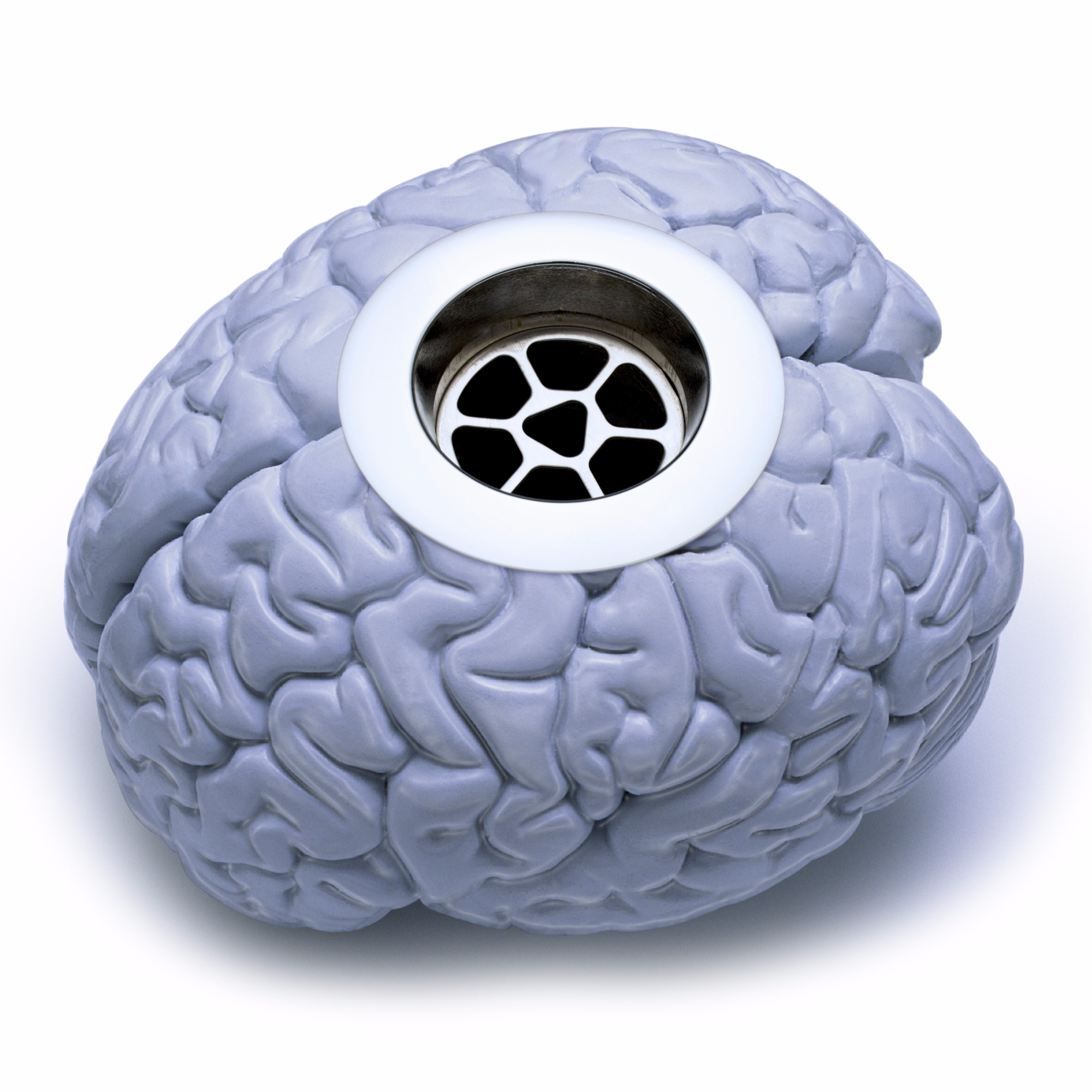
While brain drain refers to the departure of the bright and educated from a particular country, I also use it to describe the terrible drain on focus, energy and attention when our thoughts are consumed with things negative or unproductive.

Studies demonstrate that most of us find our thoughts go south when alone and unoccupied. It appears our thoughts are like water, unhindered they flow downhill, sometimes into the gutter or down the drain.

Not infrequently, my brain fixates on a difficult circumstance, something I failed to do, or some distraction or unpleasantness. From there, I easily slip into negative feelings and shame. That’s when I desperately need a stopper in the drain.

When it happens to you and you find your brain obsessing with worry, struggling with temptation, or feeling condemned, try this little prayer: “God, have mercy on me, a sinner.” “God, have mercy on me, a sinner.”

Repeating it over and over gives a focus for your mind and turns your grief toward God. You may still feel pain and distress, but it becomes fuel to turn your heart toward God. He is an ever-present help in time of trouble. He is a rock, a strong fortress, and mighty tower. You can run to Him and be safe.

Another form of the prayer, “Lord Jesus Christ, Son of God, have mercy on me a sinner”, is called the Jesus prayer, coming to us from the Eastern Orthodox Church. The prayer’s origin, however, is found in the book of Luke. Here it is –

To some who were confident of their own righteousness and looked down on everyone else, Jesus told this parable:  

“Two men went up to the temple to pray, one a Pharisee and the other a tax collector. The Pharisee stood by himself and prayed: ‘God, I thank you that I am not like other people—robbers, evildoers, adulterers—or even like this tax collector. I fast twice a week and give a tenth of all I get.’

“But the tax collector stood at a distance. He would not even look up to heaven, but beat his breast and said, ‘God, have mercy on me, a sinner.’

“I tell you that this man, rather than the other, went home justified before God. For all those who exalt themselves will be humbled, and those who humble themselves will be exalted.”                                                                                           – Luke 18:9-14

So look up when you are down and turn your grief toward God. His mercy comes to us like the rain, filling and refreshing after dread brain drain!


Emotionspeak.

uncovering-the-pain-behind-your-childs-anger

We need skills to access feelings and we can learn the language of emotion most readily as children. Some of us became champions early on, blessed with parents who pressed in, encouraging us to find words to share our feelings rather than act them out. They taught us, “Use your words.”

These parents validated deep sentiments and authorized their expression. When they saw us in distress, they encouraged us to open up and articulate how we felt. Sometimes they guessed at our feelings and asked for confirmation. “You look sad. Are you okay?” “I bet you feel angry now.” “Are you disappointed you didn’t get a part in the play?” “You must feel happy; you worked so hard on your spelling words.”

They sat with us in our grief and reveled in our delight. Even when we were full of anger or frustration, these healthy parents encouraged us to verbalize feelings and work them through. They knew that if we want to manage our emotions rather than have them control us, we must acknowledge them and get them out so we can examine them. As Daniel Siegel says, “Name it to tame it.”

Others of us were not so fortunate. Our moms and dads were uncomfortable with strong emotion, or maybe they were simply preoccupied and unavailable. Some of them sent myriad messages that our feelings were wrong or that we should not express emotions. “Children are to be seen and not heard!” Whether we were boisterous or bawling, we were told to tone it down. “Hush your crying or I’ll give you something to cry about!” “Don’t you sass me!” “No singing at the table!”

Some children get shamed for tender or strong feelings. “Don’t be a crybaby!” “Go to your room until you can put on a happy face!” These children learned to squelch emotion or to avoid it altogether. “Get over it. It’s not that big a deal!” Sometimes we were even told, “That’s not how you really feel!” And if we questioned the rules, we were told, “Because I’m the parent and I said so!”

I grew up being shamed for my sensitive nature and the outflow of angry emotion was met with hostility or punishment. I also learned that it was not okay to ask for help. Even in college, I was so disconnected from feelings that I had no idea what made me angry. For those of us not schooled in “emotionspeak”, even awareness of feelings takes practice. And even small emotions, like irritation, can be big factors in driving the compulsive behaviors many of us employ to avoid our feelings.

From research and personal experience, we know we can’t suppress negative emotions without dampening positive ones as well. We must confess and clear away the darker feelings so we can enjoy the brighter ones. Like digging for buried treasure, we find the heart of gold only after digging through the dirt. And as we listen to our hearts, we can also get better at tuning in to the voice of God that speaks in our soul’s inner rooms.

So go there! Feel your feelings and work them through. God knows your heart, even more than a loving parent intuiting a child’s emotion. But how much better for relationship and for us when we take the time to explore what is inside and share it in the the safety of a loving alliance.

There is release in expression. No matter how powerful or painful the feelings, getting them out helps. Jesus says it well, “Blessed are those who mourn, for they will be comforted.” – Matthew 5:4

God is a good Father. You can say anything to Him. His shoulders are broad and He is slow to anger and full of unfailing love. He wants to hear from you!

Soul Squatters

hey-couch-potato-here-are-3-ways-to-stop-stalling-and-land-one-of-the-32-million-open-jobs

“As he thinketh in his heart, so is he.” Proverbs 23:7  KJV

Yesterday, I watched a reality TV competition show with my wife, Teri. I watched portions of several episodes and got drawn into the personalities and the drama. Not only was it a waste at the time, I found myself thinking about it when I went to bed and when I woke up in the night.

When something stirs us emotionally, it can get under our skin. It infects us with joy or angst, delight or despair. Think about it. What thoughts move you and where do you fixate? Where is your frustration and desire? What are your longings and dreads? What passions and anchoring values are core? What gets you out of bed each morning and which thoughts engage you in the dead of night?

You are, as they say, what you eat. And what your brain feeds on becomes embodied in you. The thoughts you chew on throughout the day set your focus and direction. They become a part of you.

While it’s true we need to eat vegetables, we don’t want to be one. Don’t do what I did yesterday, vegging out on entertaining fare without nutritional value. The occasional splurge probably won’t hurt, but we need a steady diet of wholesome thinking to keep our heads in a good space and help us grow and enjoy the fruits of the Spirit. (Couch potatoes are not on the list!)

It takes efforts to guard our minds, but the best way to keep unwholesome thoughts from staying too long is to turn them away at the door. If we invite them in and entertain them, they may decide to stay for a sleepover. And before long, the gnarly guests may become residents, sprawling on our mental sofa, consuming brain food and cluttering the space where Jesus wishes to settle in.

So don’t let your soul space be commandeered by unsavory thoughts. Many thoughts appear charming and innocent, but once in, they hijack our inner conversations and keep us from communing with Jesus, our source of joy and peace.

Finally, brothers and sisters, whatever is true, whatever is noble, whatever is right, whatever is pure, whatever is lovely, whatever is admirable—if anything is excellent or praiseworthy—think about such things.                                                                                        – Philippians 4:8 NIV

Happy Father’s Day!

father-and-sonBeing a father is one of the most rewarding gifts of being a man. How great it is to invest in the life of a little one and then launch them into the world!

We dads have the unique privilege of giving our children their first taste of a father’s love by our touches and teachings, by playful wrestling and patient instruction. We instill confidence and inspire success, we provide nurture and discipline.

Yet the best dads not only display strength and prowess when engaging in games and sports, they also let their children win. They inspire admiration and allow for some idolization when their kids are young, but they help level the playing field as their children age by revealing their own limitations and uncertainties as fathers.

At some point, the best dads lead their children into the understanding that we are all the same. We are all children and we need a perfect daddy. No human father can possibly fill the longing our hearts harbor for that Dad that is strong enough to carry us in our weakest times in life and to contain us in our times of intense rebellion or grief.

In our best moments as dads, we give our children a taste of our heavenly Daddy’s love and we prime them to connect with Him. Indeed, we all tend to see God in the light of our earthly dad. Yet in our worst moments, dads can also point to the one Dad when we acknowledge our brokenness and lead our children to find refuge in Him, their heart’s true home.

Identifying with an earthly dad is a great thing, but finding our true identity in our heavenly Father is the best thing. Jesus says, “Do not call anyone on earth ‘father,’ for you have one Father, and he is in heaven.” Matthew 23:9

For all you dads who have kids open to your love, tell them! For those with prodigals, pray for God to bring them home. And for all of you with an earthly dad that can be honored, use words or actions to express your thanks to him today.

But for all of us, let us remember we all share a Father who loves us more than we can comprehend. Share the love with Him, too. Happy Father’s Day, Daddy!

Happy Father’s Day, all!